Why Knocking Down Nails and Cleaning Gaps Matters Before Sanding a Wood Floor
When we walk onto a floor ready to sand — especially older pine floors — there are a few things we nearly always find.
Most floorboards are nailed down, often with a mix of old nails, staples, and sometimes badly fitted screws.The gaps between the boards are usually full of dirt, debris, and years of ground-in dust. If the floor has previously been covered with carpet, it’s common to find old underlay that has broken down and become embedded deep into the gaps.
These might seem like small details, but they make a big difference to the final result.
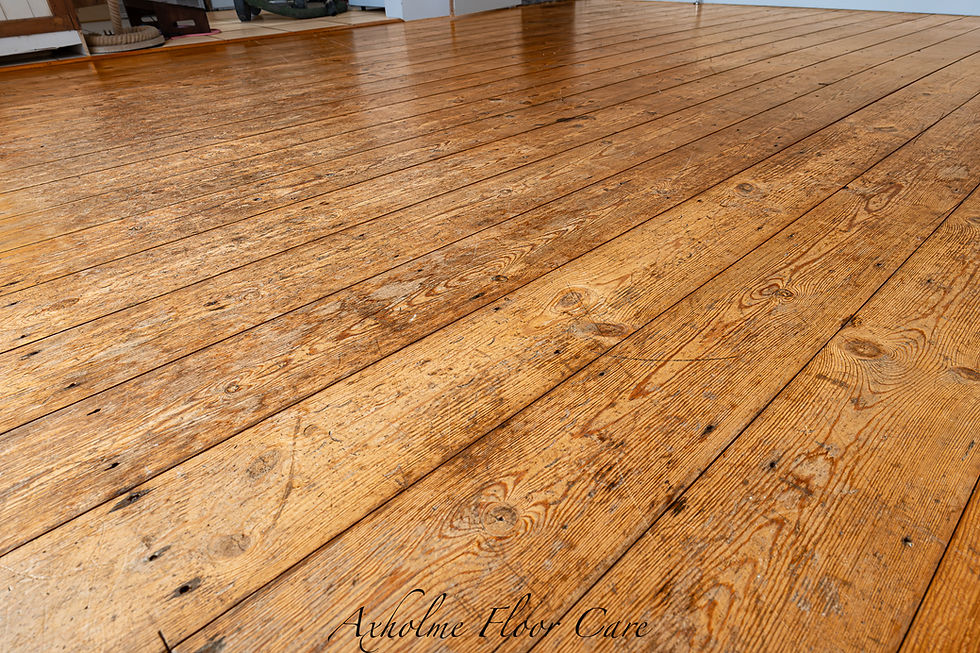
Why Nails Need to Be Knocked Down
Before any sanding starts, all nails need to be knocked down properly.
If this step is skipped, the sanding process can cause real problems.Nails can damage sanding belts, create sparks, and in some cases even loosen as they’re hit repeatedly by the machine.
It also affects the finish of the floor.Because nails are harder than the surrounding wood, the sanding machine can ride over them, leaving high spots and creating an uneven surface.
The result is a floor that looks inconsistent and poorly finished — even if the rest of the sanding has been done correctly.
What’s Hiding in the Gaps
The gaps between floorboards often hold years of build-up.
This can include:
Dirt and dust
Old, worn carpet underlay
Grit and small debris
Over time, this gets compacted into the gaps and becomes part of the floor.
Why Cleaning the Gaps Is Important
Cleaning out the gaps before sanding isn’t just about appearance — it directly affects the quality of the finish.
Leaving debris in the gaps can cause:
Grit being pulled out during sanding, leading to scratches
Contamination when applying finishes like lacquer
Poor adhesion, meaning finishes don’t bond properly
By properly cleaning the grooves, the floor is prepared for a smoother sanding process and a more consistent, longer-lasting finish.
What Happens If This Step Is Skipped
If nails aren’t knocked down and gaps aren’t cleaned, the final result will always suffer.
You’re likely to see:
Uneven sanding with visible high spots
Scratches caused by loose grit
A finish that doesn’t sit or bond properly
An overall look that just isn’t clean or professional
It’s one of the main differences between a rushed job and a proper restoration.
How We Do It
Every floor is prepared before sanding begins.
All nails are individually knocked down to make sure the surface is safe and even for sanding.The gaps are then cleaned out using specialist groove cleaning equipment to remove built-up dirt and debris.
It’s not the quickest part of the job — but it’s one of the most important.
Why It Matters
Sanding a floor properly isn’t just about running a machine over it.
It’s about preparation, process, and attention to detail.Getting these early stages right is what allows the rest of the work to come out clean, flat, and consistent.
It’s also why two floors can be sanded — and only one actually looks right at the end.

If you’re looking to have your floor restored properly, we carry out wood floor sanding and restoration across Cleethorpes, Grimsby, Scunthorpe, Hull, Doncaster and Lincoln.
Call or text 07740 708866 for advice or a quote


Comments