Should I Hire a Professional or Rent a Sander for My Wood Floors?
Updated: Jul 29
If you’re thinking about restoring your wood floors, one of the biggest questions is whether to hire a professional or rent a floor sander and do it yourself.
At first glance, hiring a machine for the weekend can seem like the cheaper option. But after restoring many floors that homeowners have already attempted themselves, I can honestly say that wood floor sanding is one of those jobs that looks far easier than it actually is.
That doesn’t mean DIY is impossible — but there are a few things most people don’t realise until they’re halfway through the job.

The Biggest Problem With DIY Floor Sanding
The main issue usually isn’t effort — it’s damage to the wood caused by incorrect use of the sanding machines.
I regularly go to floors where homeowners have tried sanding themselves but struggled to get a smooth finish because incorrect sanding methods were used.
Some of the most common problems I see include:
Deep sanding grooves
Chatter marks across the floor
Uneven sanding
Dished or wavy boards
Poorly finished edges and corners
Coatings applied incorrectly
Damage to parquet blocks
Sanding through engineered wood wear layers
In some cases, especially with engineered flooring, the damage can be permanent and impossible to fully repair.

What Most People Underestimate
One thing many homeowners underestimate is how difficult it is to achieve a genuinely flat, even finish.
Sanding a wood floor properly is not just about “making it look cleaner.” The sanding process has to level the floor evenly while removing old coatings, scratches and wear without creating dips or marks.
People also often underestimate:
How expensive sanding discs and abrasives become
How dusty rental machines can be
How difficult edges and corners are to get right
How physically demanding the work is
How long the process actually takes
By the time machines, abrasives, fillers and finishes are paid for, the saving is often far less than expected.
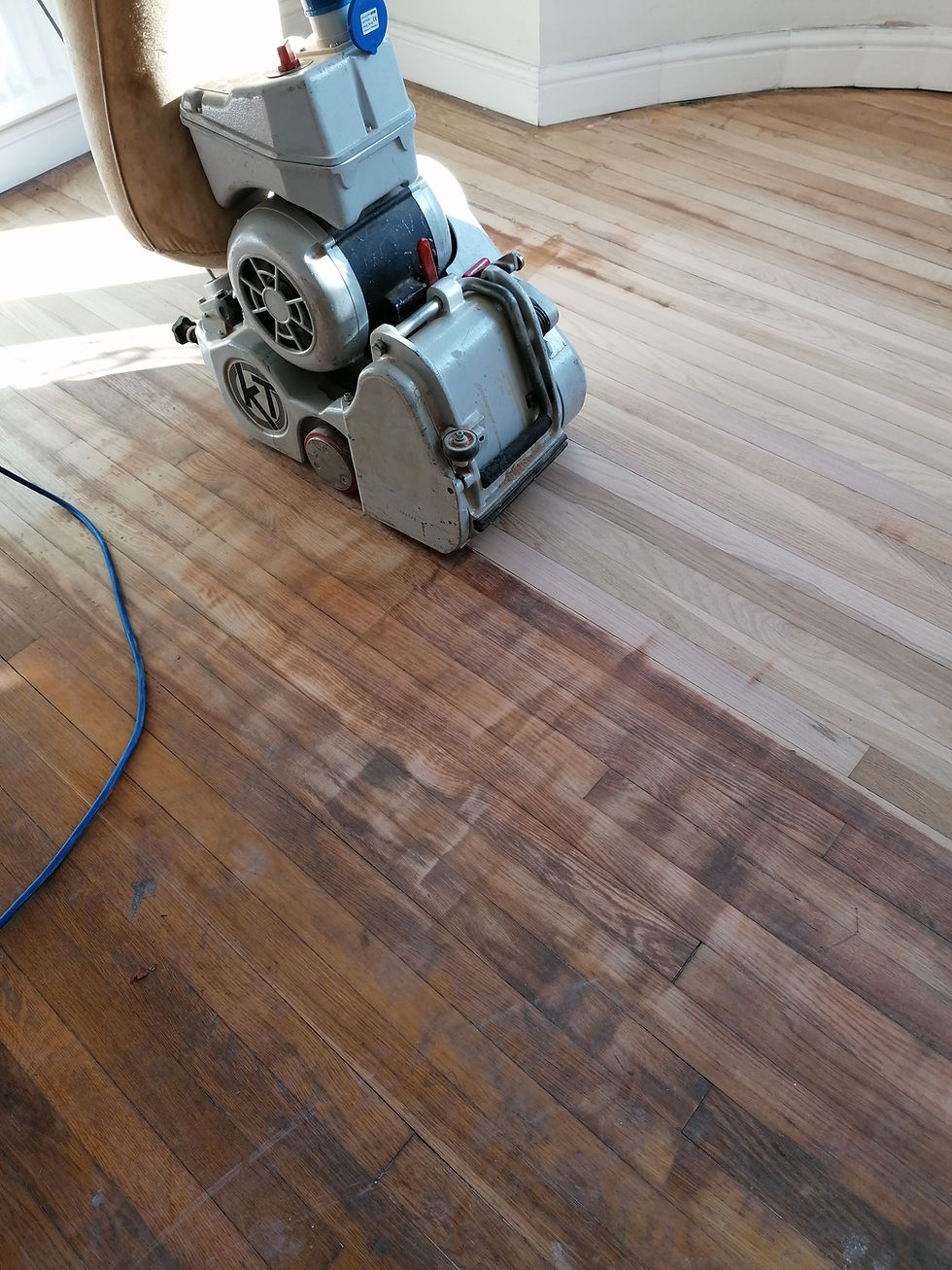
Hire Machines vs Professional Equipment
There’s also a major difference between professional sanding systems and most rental machines.
Rental machines are used by people with no training and often get battered over time, damaging the wheels and drums. Once those parts are worn, the machine no longer sands evenly.
Professional equipment is serviced regularly, with wheels and drums kept in proper condition to produce a flatter, smoother finish.
Another major difference is dust control.
Professional sanding systems use powerful dust extraction designed to collect the majority of dust at source, while many hire machines create considerably more airborne dust throughout the property. About axholme floor care equipement
Some Floors Are Much Riskier to DIY
Engineered Wood Floors
Engineered flooring can be badly damaged very quickly if sanded incorrectly. The top wear layer is often thinner than people realise, and once sanded through, the floor may need replacing.
Pine Floorboards
Pine is much softer than oak and other hardwoods, which means it’s easy to sand too aggressively and create dips or uneven areas.
Floors With Raised Nails
Not knocking nails down before sanding can seriously damage sanding machines and leave marks across the floor.
Parquet Flooring
Parquet requires careful sanding because the grain direction changes throughout the floor. Incorrect sanding techniques can leave very noticeable marks and unevenness.
Is There Ever a Time DIY Makes Sense?
Honestly, yes — in some situations.
If the floor is simply being levelled before covering it with laminate or carpet and the wood itself is not going to be visible afterwards, hiring a machine can make sense.
But if you want a properly restored finished floor that looks smooth, flat and professionally finished, it’s usually worth hiring someone experienced.
The Biggest Difference in the Final Result
The biggest difference between a professional restoration and most DIY sanding jobs is usually the flatness and consistency of the finish.
A professionally sanded floor should feel smooth and even throughout the room, with a uniform finish across both the main floor and edges.
That’s what customers tend to notice immediately.
One of the most common things people say after seeing their finished floor is:
“I can’t believe it’s the same floor.”
My Honest Advice
If you’re on the fence about hiring a professional, my honest advice would be:
Hire a professional and save yourself the time, stress and risk of damaging the floor.
Wood flooring can often be completely transformed, but it takes the right equipment, sanding methods and experience to get the best result.
Done properly, sanding and refinishing can make an old floor look completely different without the cost of replacing it.
If you’re looking for professional wood floor sanding and restoration across Scunthorpe, Doncaster, Lincoln, Hull or Grimsby, Axholme Floor Care offers honest advice, dust-controlled sanding and professional restoration for oak, pine, parquet and engineered wood floors.
You can view more before and after examples of our professional wood floor sanding and restoration work on our Wood Floor Sanding Gallery, including oak floors, parquet restoration, pine floorboards and engineered flooring projects across Lincolnshire and surrounding areas.

Comments