Why Has My Wooden Floor Gone Patchy or Dull?
Updated: Jul 29
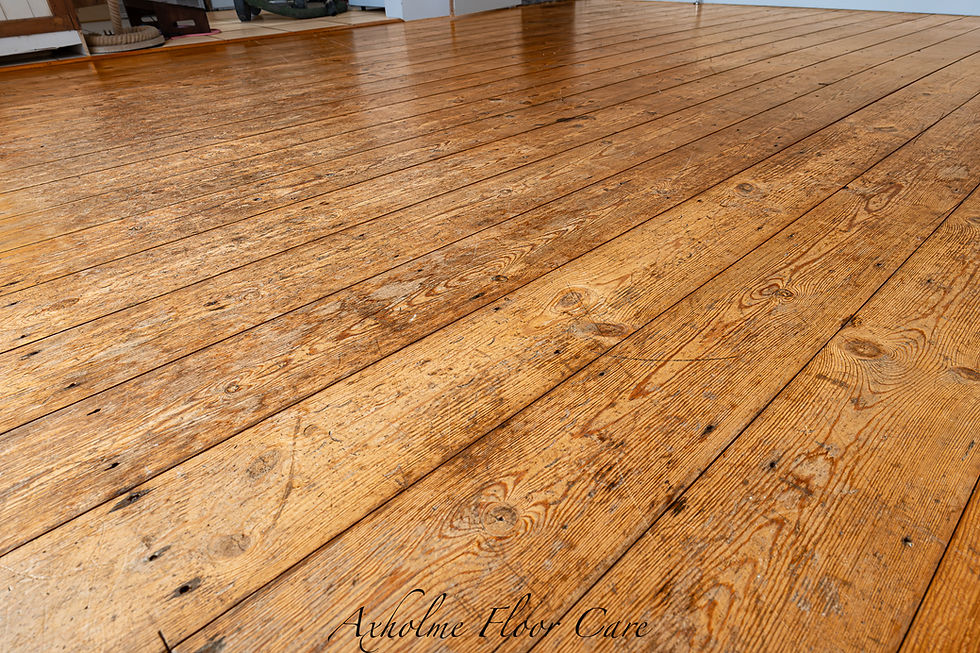
This is something I get asked quite a lot. A wooden floor can look fine for years, then slowly it starts to look dull, patchy or worn in certain areas.
Sometimes it’s the walkways that go first. Other times it’s around a table, near a doorway, or where rugs and furniture have been. The floor might still clean up, but it never really looks right again.
Most of the time, this doesn’t mean the floor is ruined. It usually means the finish has started to wear, break down, or the wood itself has changed colour over time.
Wear in the Busy Areas
The most common reason is everyday use.
Hallways, kitchens, doorways and areas where people walk all the time will always wear quicker than quieter parts of the room. Once the finish starts to thin out, the wood underneath has less protection.
That’s when you start to see dull patches, grey-looking areas, scratches, or parts that feel a bit rougher underfoot.
At this point, more cleaning won’t really solve it, because the issue isn’t just dirt sitting on the surface. It’s the finish itself wearing away.
Cleaning Products Can Make It Worse
Another thing I see quite often is build-up from the wrong cleaning products.
Polish sprays, general household cleaners, steam mops, wax products or too much water can all leave the floor looking smeary, cloudy or uneven. Sometimes people keep cleaning it more and more because they think it’s still dirty, but the product is actually part of the problem.
For real wood floors, you’re usually better with a proper pH-neutral wood floor cleaner and a barely damp microfiber mop. You don’t want to soak the floor, and I’d avoid steam mops on real wood.
You can read more about the differences in our hardwax oil vs lacquer guide.
Oxidisation, Tannins and Colour Changes
Wood naturally changes colour over time. Light, air and age can all affect how the timber looks.
Some woods also contain tannins, which can react and cause dark patches or colour changes. Oak is a common one for this, but other timbers can react too depending on what has been on the floor and how it has been used.
This is why you sometimes lift a rug and see a clear shape left behind, or notice that one part of the floor is a different colour to the rest. It isn’t always dirt. Sometimes the wood and finish have simply aged differently.
Sanding and refinishing can often improve this, but it depends how deep the colour change has gone and what type of wood it is.
Old Finishes Don’t Always Wear Evenly
Different finishes wear in different ways.
A lacquered floor might go scratched, dull or cloudy as the coating breaks down. An oiled or hardwax oiled floor can start to look dry in the busier areas if it hasn’t been maintained.
Older floors can also have a mix of products on them from over the years. One person may have used polish, another may have used wax, then something else later on. That can leave the floor reacting differently in different areas.
This is why I always like to have a proper look at the floor before saying exactly what it needs.
Urine, Water Marks and Deep Staining
Water marks can be caused by plant pots, spillages, leaks, damp mats, pet bowls or cleaning with too much water. Some marks only affect the finish, but others can soak deeper into the timber.
Pet urine can be especially awkward. It can react with the wood, leave dark staining and sometimes leave a smell as well. Cat and dog urine can be worse if it has been left for a while or soaked between boards or blocks.
In some cases sanding will improve it. In other cases, if the staining has gone too deep, it may not come out completely. Sometimes repair work or replacing small areas of timber is the better option.
That’s why it’s best to check the floor properly before promising that every mark will disappear.
Previous Sanding or DIY Work
Patchiness can also come from previous sanding.
If a floor has been sanded unevenly, or the wrong grit sequence has been used, the finish can soak in differently across the floor. Stain makes this stand out even more, because it highlights scratches, swirls, darker edges and uneven sanding marks.
I’ve seen quite a few floors where someone has had a go themselves or had it sanded quickly in the past, and the damage only really shows once a new finish or stain goes on.
Can a Patchy Wooden Floor Be Restored?
In many cases, yes.
If the problem is worn finish, scratches, old coatings or general dullness, the floor can usually be sanded back and refinished. The important part is preparing it properly, not just giving it a quick sand and hoping for the best.
A proper restoration normally includes checking the floor first, sanding through the right stages, dealing with the edges and corners, carrying out any repairs if needed, then applying a finish that suits how the room is used.
That could be hardwax oil, lacquer, or a more hard-wearing finish depending on the floor and the property.
When Cleaning Isn’t Enough
If your wooden floor still looks dull or patchy after cleaning, it may be that the finish has simply worn too far or the timber has been affected below the surface.
At that stage, cleaning won’t bring it back properly. The floor may need sanding and sealing again so it has a fresh, even finish and proper protection.
If you’re not sure, the easiest thing to do is send over a few photos. I can usually give you an honest idea of whether it needs a full restoration, a repair, or whether a maintenance clean might be enough.
Axholme Floor Care restores wooden floors across Scunthorpe, Doncaster, Lincoln, Hull, Grimsby, Gainsborough Goole and surrounding areas.
Call Marcus on 07740 708866 www.wood-floor-care.co.uk


Comments